Why so many believers still live bound—and how Jesus sets us free
(Featuring my interview with Mark Hopson from Decision Point)
Jerusalem, circa A.D. 30. The scene in the 8th chapter of the gospel of John takes place during the Jewish Feast of Tabernacles.
The festival, known as Sukkot, commemorated Israel’s forty years wandering in the wilderness, when God faithfully guided His people by a pillar of fire. To remember God’s faithful guidance through the wilderness, enormous lamps—towering golden menorahs—were lit in the temple courts.
These were not small candles. Ancient writings tell us the lamps were so bright that their light illuminated much of the city. Worshippers gathered in the temple courtyard to sing psalms, dance, and celebrate the faithfulness of God who had led them through the desert.
It was during that very celebration that Jesus stood up in the temple courts during his ministry, and said something that astounded and infuriated the Jewish leaders:
“I am the light of the world. Whoever follows me will not walk in darkness, but will have the light of life.” (John 8:12)
Imagine hearing those words while the enormous temple lamps blazed around you.
Jesus was making a breathtaking claim. The light that once guided Israel in the wilderness was now standing before them in human form.
But Jesus didn’t stop there.
In that same conversation, He addressed a deeper darkness that affects every human heart. Speaking to the people gathered around Him, He said:
“Very truly I tell you, everyone who sins is a slave to sin… So if the Son sets you free, you will be free indeed.” (John 8:34–36)
Freedom
It is one of the most powerful promises in all of Scripture. Yet if we are honest, many believers who sincerely love Christ still walk through life carrying invisible chains.
We come to church. We serve faithfully. We raise our hands in worship. But somewhere along the way, the vibrant freedom we once experienced in Christ seems to fade. And without even realizing it, we begin drifting back into subtle forms of captivity.
Sometimes the chains come through legalism.
The apostle Paul confronted this problem in the Galatian church. Influenced by teachers known as Judaizers, believers were being told that faith in Christ was not enough—that they also needed to follow additional religious rules to be accepted by God.
Paul’s response was direct: “It was for freedom that Christ set us free. Stand firm, then, and do not let yourselves be burdened again by a yoke of slavery.” (Galatians 5:1)
Legalism quietly replaces grace with performance. Instead of living in the freedom Christ purchased, we begin trying to earn God’s approval through outward behavior.
It’s like a bird released from its cage that eventually returns to sit comfortably inside the prison it once escaped.
Other times the chains are less obvious.
Many believers are bound by busyness.
In our modern culture, constant activity is often mistaken for deep spirituality. Churches are filled with people who are busy doing things for God, yet rarely pause long enough to let God shape their hearts.
In the tenth chapter of the gospel of Luke, Jesus lovingly addressed this in the life of Lazarus’ big sister, Martha:
“You are worried and upset about many things, but few things are needed.” (v.41)
When our lives are overcrowded with noise and activity, we often neglect precious personal time with God. This busyness may become the perfect tool the enemy needs to prevent us from hearing God’s direction and receiving His protection. The apostle Peter warns believers to be watchful because the enemy prowls like a roaring lion (1 Peter 5:8). But how can we remain spiritually alert if our minds are constantly overwhelmed?
Another chain that quietly binds believers is the lies we believe.
Some carry false beliefs about God. When trials come, they assume they must have done something wrong. Yet Jesus corrected this thinking when His disciples asked why a man had been born blind:
“It was not that this man sinned, or his parents, but that the works of God might be displayed in him.” (John 9:3)
Others believe lies about themselves—words spoken long ago by a parent, a teacher, or a spouse. Whether the words were spoken out loud or not, your heart took the bait, and you now believe debilitating lies about yourself:
“You’re not good enough.”
“You’ll never change.”
“God cannot use you.”
But the cross tells a different story.
Jesus stretched His arms wide and gave His life for you. In God’s eyes, your worth is immeasurable and your life is priceless.
But there is another form of captivity that often remains hidden—even inside church walls.
It is the bondage of addiction.
When people hear the word addiction, they often think of substances like alcohol or drugs. But addiction can take many forms—prescription medication, pornography, gambling, compulsive behaviors, or even patterns of emotional dependency.
And here is the painful reality: many believers battling addiction are sitting quietly in church every Sunday.
They sing the hymns.
They greet friends in the hallway.
They serve in ministries.
But inside, they feel trapped in a prison few people around them can see. Shame keeps them silent. Fear tells them they are the only one struggling. And the enemy whispers the devastating lie that freedom is impossible.
Yet Jesus’ words still stand: “If the Son sets you free, you will be free indeed.”
Real freedom is not found in willpower or self-discipline alone. It comes through the transforming power of Christ, working in the deepest places of the human heart.
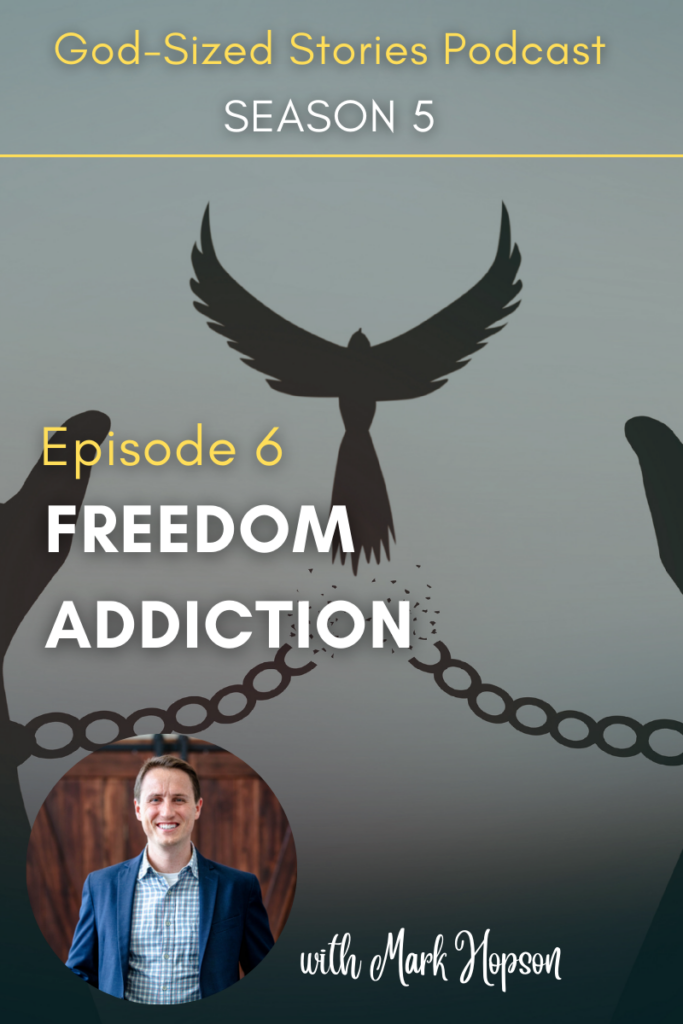
This theme of true freedom is exactly what I explored in a recent conversation on my podcast with Mark Hopson, Executive Director of Decision Point, a ministry dedicated to equipping students across the country to boldly share their faith on school campuses.
Mark has spent years walking alongside people who long to break free from destructive patterns—including addiction—and helping them discover that the gospel offers more than forgiveness.
It offers transformation.
In his book Set Free, Mark explains how Jesus meets people in the middle of their struggles and leads them toward lasting freedom.
Our conversation reminded me again that the chains people carry may look different—legalism, bitterness, lies, busyness, addiction—but they are never too strong for the One who came to break them.
The Savior who stood in the temple courts during the Feast of Tabernacles and declared Himself the Light of the World is still doing the same work today:
He is still breaking chains and setting captives free.