Column for The Atlanta Journal-Constitution
The closing chapters of Genesis (49–50) pull back the curtain on the final days of Jacob — and the completion of one of Scripture’s most moving stories: the life of Joseph.
After Joseph rescued his family from the famine that ravaged Canaan, his father, Jacob, gathered his twelve children to tell them what would happen to them in the future.
The chapter is commonly referred to as the “Blessing of Jacob.” However, the text contains a mixture of blessings and curses delivered in a speech rich in prophetic imagery and somber realization.
To some of the sons, Jacob’s words must have pierced like a sharp sword— a blow revealing their father’s true feelings toward their deception and life decisions. Others carried the words to their grave without understanding the whole meaning of the message.
For those who study scriptures, the message behind Jacob’s blessings and curses comes into clearer focus as we deepen our knowledge of Israel’s history after the patriarch’s death. Some of it foreshadows Israel’s victories and defeats, with a special emphasis on the blessing spoken over Judah — the branch from which the Messiah would one day come. The epithet “lion of Judah” (Revelation 5:5) derives from this blessing.
As the story unfolds, we read of the journey back to Canaan to bury Jacob, and the many days of mourning observed by his family and the Egyptian caravan that accompanied them. After the burial, Joseph, his brothers and the caravan returned to Egypt.
I can only imagine the uneasiness in the older brothers’ hearts following Jacob’s death. Their father, they must have believed, served as a buffer between Joseph—now governor of Egypt—and the men who had robbed him of years of his life. Surely now that their father was gone, Joseph would exact his revenge!
And so, the cunning brothers come up with another plan. In a nutshell, they decided to tell another lie: “Let’s tell him dad asked him to forgive us for selling him into slavery!” We watch it unfold in chapter 50.
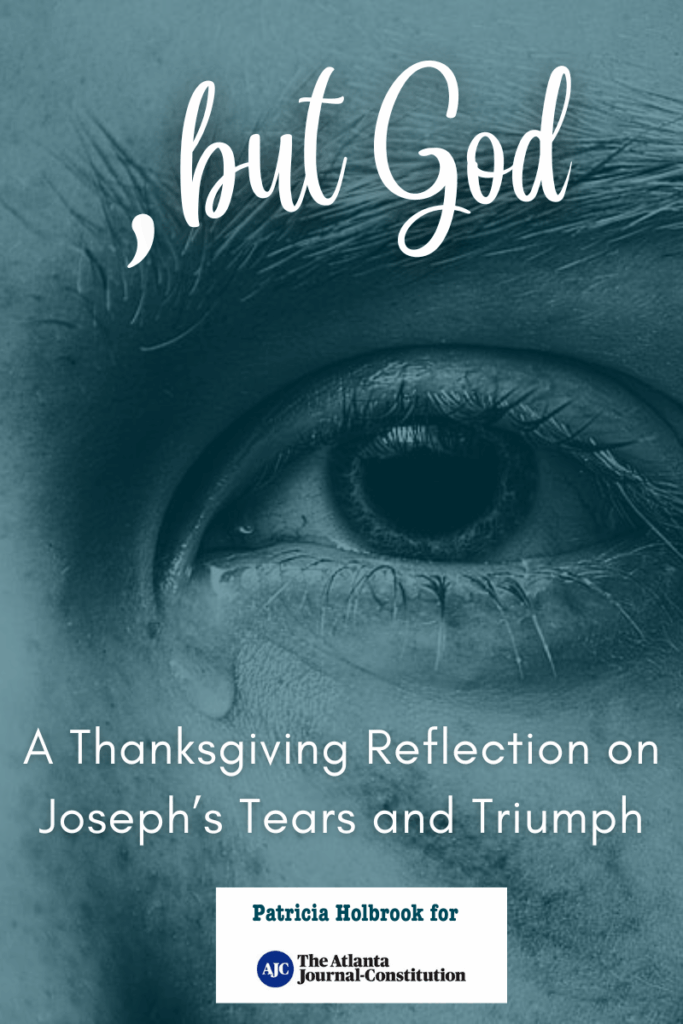
Joseph’s response? He wept.
As tears fell down his face, the brothers’ knees gave out: “They fell down before [him] and said, ‘Behold, we are your servants.“
If you’ve read the account, you know what follows—not a long speech, no hesitation, no revenge.
We read about a man weeping with humble, grateful realization, and then the words that echo throughout history as a reminder of God’s sovereignty through life’s fiercest storms:
“‘Do not be afraid, for am I in God’s place? As for you, you meant evil against me, but God meant it for good in order to bring about this present result, to preserve many people alive. So therefore, do not be afraid; I will provide for you and your little ones.’ So he comforted them and spoke kindly to them.'”
Oh, this is one of the most epic moments in scriptures, indeed!
The bible doesn’t record the brothers’ response. Furthermore, one must dig deeper to learn more about the lives of the other eleven men.
Joseph’s life, however, has impacted generations — rich in lessons on enduring faith, steadfast trust and divine intervention.
From favored son to enslaved servant. From slave to prisoner, unjustly accused of a crime he didn’t commit. Scholars believe that Joseph was about seventeen years old when sold into slavery, and around thirty when Pharaoh made him second-in-command over Egypt. Thirteen long years.
His response, in every circumstance, shows a heart sold out to the conviction that, through it all, God was always in control.
The lesson from this passage that rings loudly in my heart this Thanksgiving season is this:
No human evil plan can hinder the purposes of our sovereign God.
And as we navigate life’s inevitable brutal storms, we can be certain that God will carry us through to his final destination, no matter what.
May this be your exercise this Thanksgiving season: recall the times you thought all was lost and how God came through, time and again.
Then, as Joseph did, by faith declare to your enemies, or speak to the wind that threatens to break you:
“But God. But God. But God.”
This article was originally published in Patricia’s column for The Atlanta Journal-Constitution on Saturday, November 15th, 2025. Click HERE to find it on the AJC’s website.
No human evil plan can hinder the purposes of our sovereign God. And as we navigate life's inevitable brutal storms, we can be certain that God will carry us through to his final destination, no matter what. @AJC Share on X